

.svg)


 FileGrant
 RemoteGrant
 Connector
 AIGrant
 EmailGrant
 SecretGrant
Artificial intelligence for data security. The AI that defends you, even from AI
AI is already inside your business, and so is the risk of data slipping out unnoticed. CyberGrant uses AI to classify and protect your documents, and blocks the generative AI that tries to siphon them off. You govern access, sharing, and data leaks without slowing your teams down.
Artificial intelligence and data security: risk and defense
AI is already inside the organization, often without IT knowing. According to the IBM Cost of a Data Breach Report 2025, one in five breaches involves shadow AI, the use of ungoverned AI tools, and those incidents add an average of $670,000 to the cost of the breach, hitting customer personal data and intellectual property hardest.
The same technology is also a defense. It classifies sensitive data the moment it is created, applies encryption with no action from the user, and flags anomalous behavior in real time. AI adoption is a given now. What matters is who controls it. CyberGrant works on both sides: it puts AI to work protecting your data while stopping AI from becoming an exfiltration channel.

AI control in the enterprise: governing shadow AI without banning it
AI is already in daily workflows. Banning it does not stop the risk, it pushes it into the shadows: employees keep using personal tools and pasting company information into them. In the TELUS Digital AI at Work survey (2024), 57% of employees said they had entered sensitive data into public AI platforms.
This is shadow AI, and it has a well-known precedent. In 2023, Samsung engineers pasted confidential source code into ChatGPT, which led the company to restrict generative AI use.
CyberGrant offers two paths you can combine. First, authorize only a private, company-run AI, deployed on-premise and aligned with your security policies and GDPR, so data stays inside your infrastructure.
Second, let people use external AI tools while Data Loss Prevention blocks the upload or pasting of company documents. The principle is the same either way: you do not ban AI, you govern the data that flows through it.
Automated data classification with AI
In Data Loss Prevention, everything starts with classification: you can only protect what you can recognize as sensitive. The problem is that manual classification is slow, complex, and prone to errors or omissions. It is the leading reason traditional DLP fails.
CyberGrant's automated classification runs on a private, on-premise AI that is never exposed to public clouds. The AI analyzes content the moment it is created or changed, recognizes sensitive data, and applies tags, access rules, and encryption consistent with your company policies.
Once applied, tags take priority over user actions: if a document is marked as non-downloadable, no one can download it. This is the shift from a DLP that asks users to enforce security to one that enforces it for them, governed by AIGrant and applied to files by FileGrant.


Anti-AI scraping: protecting company documents from generative AI
AI scraping is a growing threat: generative AI models can capture sensitive data from company documents, even ones only viewed in an unsecured browser or uploaded to a chatbot.
Traditional sharing platforms do not protect information once it is open on screen
FileGrant's anti-AI scraping stops AI from reaching files opened through the in-browser viewer, while authorized people keep viewing them normally.
The content stays readable to those with permission and invisible to anything trying to extract it automatically. Confidentiality is on by default, not left to the user's attention.
Private on-premise AI: the sovereign alternative to public AI assistants
Public AI assistants are useful, but to work they have to read your data. For a company handling contracts, medical records, or confidential projects, that means handing your most critical information to external infrastructure.
The IBM Cost of a Data Breach Report 2025 found that 63% of breached organizations had no governance policy to manage AI or detect its unauthorized use.
AIGrant is a private, on-premise AI built on an enterprise RAG. RAG (Retrieval Augmented Generation) is the technique that lets an AI answer by querying your company documents instead of relying only on the model's generic knowledge. AIGrant knows your documents, queries them, and finds what you need without data ever leaving your infrastructure. It works alongside tools like Microsoft Copilot, with department-segregated access and zero-knowledge keys. It is how you get the value of generative AI while keeping data sovereignty.


Whitepaper
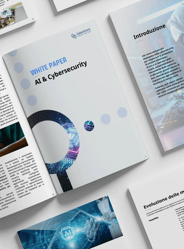 AI is already inside your company: teams use it every day, often out of control.
Govern it, or absorb the consequences. Download the AI & Cybersecurity whitepaper and see how to protect data, processes, and compliance, turning AI from a risk into an opportunity.FAQ
Shadow AI is the use of AI tools that IT has not authorized or does not govern, such as public chatbots used with personal accounts. The risk starts when employees enter company information into them. According to the IBM Cost of a Data Breach Report 2025, one in five breaches involves shadow AI and adds an average of $670,000 to the cost of the incident. You govern it by authorizing a private internal AI and applying Data Loss Prevention controls on outbound data.
Banning AI pushes the problem into the shadows instead of solving it. The effective approach is twofold: provide a private, compliant company AI and, at the same time, use Data Loss Prevention to block confidential documents from being uploaded to external tools. Employees keep their productivity and the company keeps control of its data.
Yes. Manual classification is slow and error-prone, and it is the leading reason traditional DLP fails. CyberGrant's private on-premise AI analyzes content at the moment of creation or change, recognizes sensitive data, and automatically applies tags, access rules, and encryption. Tags take priority over user actions: a document marked as non-downloadable cannot be downloaded by anyone.
Yes. AIGrant is a private, on-premise AI that queries company documents without letting them leave your infrastructure, with department-segregated access and zero-knowledge keys. It can run alongside tools like Microsoft Copilot without replacing them, delivering the value of generative AI while keeping data sovereignty. It is especially useful in regulated sectors like banking, healthcare, and legal.
RAG (Retrieval Augmented Generation) is the technique that lets an AI answer by querying company documents instead of relying only on the model's generic knowledge. An on-premise RAG, like AIGrant's, processes data inside the company's infrastructure without sending it to external services: the information does not feed public models and stays under the organization's control, with department-segregated access and zero-knowledge keys. That is why it suits regulated environments better than public AI assistants.
Yes. The EU AI Act (Regulation 2024/1689) introduces obligations that scale with the risk level of AI systems, and GDPR still applies whenever AI processes personal data. Adopting a private, governed, and auditable AI helps meet the transparency and control requirements of both.
Book your free demo
Talk to our security experts and learn how to protect sensitive data while enabling secure, seamless collaboration inside and outside your organization