



.svg)






 FileGrant
 RemoteGrant
 Connector
 AIGrant
 EmailGrant
 SecretGrant
FIND YOUR VULNERABILITIES BEFORE ATTACKERS DO
Real-world attack simulations to measure your exposure and harden your defenses where it actually matters.
Why offensive security matters for your business
Exploiting a known vulnerability is now the most common way an attacker gets into a company: 31% of breaches, ahead of credential abuse (Verizon DBIR 2026). The real gap is visibility, knowing which flaws are genuinely reachable from outside. In 2025 only 26% of the critical vulnerabilities in the CISA KEV catalog were fully remediated, and the median time to close one climbed to 43 days (Verizon DBIR 2026): a wide window for an attacker.
Offensive security flips the point of view and triggers the incident under controlled conditions, before it happens for real. CyberGrant RedTeam simulates the attacks an adversary would run against your infrastructure, documents them, and hands back a remediation roadmap ordered by real priority. To see how pentesting, red teaming, and ransomware simulations fit together, start with the strategic guide to offensive security.

See your attack surface the way an attacker sees it
Every forgotten domain, every accidentally exposed service, every credential leaked in a past breach is an open door. Most companies have no current map of what is reachable from outside, and you cannot close a door you do not know exists. With a median of 43 days to fix a critical vulnerability (Verizon DBIR 2026), the window an attacker gets is wide
Attack Surface Discovery and Vulnerability Assessment from CyberGrant RedTeam map exposed assets, domains, and public-facing applications, then rank vulnerabilities by real exploitability rather than theoretical score. The result is a prioritized remediation list, from the most exploitable flaw down to the least urgent.
Test your defenses with a real attack
A compliance checklist confirms a control exists, not that it holds under pressure. The distance between "we have a firewall" and "the firewall stopped the attack" shows up only when someone actually tries to break through. Without a real test, the first check of your defenses is the incident itself.
CyberGrant RedTeam runs penetration tests on web and mobile applications, infrastructure, and IoT systems, using Black-Box, Grey-Box, or White-Box approaches. The path follows the real chain of an attack: recon, exploit, lateral movement, exfiltration. The team holds OSEP, OSWE, and OSCP certifications.

Find out whether ransomware would stop you, before it does for real
Ransomware has grown to 48% of all breaches (Verizon DBIR 2026). At Colonial Pipeline, a single inactive VPN account protected only by a password was enough to shut down 45% of the East Coast's fuel supply and lead to a $4.4 million ransom. If it happened to your company, how long would operations stay down?
The Ransomware Attack Simulation from CyberGrant RedTeam reproduces infiltration, encryption, and lateral movement, and measures your real detection, containment, and response capabilities.
The DDoS Attack Simulation checks how the infrastructure holds under saturation. In both cases you get an action plan with concrete, prioritized steps.
Measure how your people react to a simulated attack
The non-intentional human element is involved in 62% of breaches (Verizon DBIR 2026). Phishing remains the cheapest way in for an attacker: one distracted click. Classroom training ages fast, the memory of a simulated attack far less.
The Phishing Attack Simulation from CyberGrant RedTeam sends realistic campaigns and measures who clicks, who reports, and who goes as far as entering their credentials. The data helps you focus training where it is weakest and shrink the least predictable attack surface, the human one.


The test finds the gaps, data protection limits what still gets out
A penetration test reduces the ways in, but some stay open by design: a legitimate insider, a vendor with access, an uncontrolled channel. Even with a solid perimeter, data keeps moving, and the moment it leaves it stops being under your control.
CyberGrant's file-centric protection acts on the data, not the perimeter. With FileGrant and RemoteGrant, the file is born encrypted with quantum-safe Lock&Go technology and stays protected outside the corporate network, with post-sharing revocation, automatic classification, and an audit trail. Offensive security measures the risk, data protection contains its impact.
Certifications


For financial firms, offensive testing is a DORA requirement
Since 17 January 2025, the DORA regulation (EU 2022/2554) has required financial entities to run structured digital resilience testing, including Threat-Led Penetration Testing (TLPT) for the most critical ones. With third-party breaches now at 48% of the total (up 60% in a year, Verizon DBIR 2026), offensive testing becomes the key proof of how well your security actually holds.
CyberGrant RedTeam delivers penetration tests, red team exercises, and ransomware simulations in line with DORA and international standards, providing documentation that is audit-ready from day one.



Whitepaper
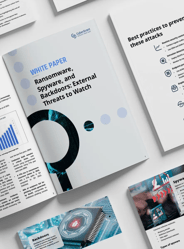
Ransomware doesn't knock. It walks in.
Double and triple extortion, backdoors, spyware. Learn to recognize the techniques and stop them before they hit your data, reputation, and operations.
FAQ
A penetration test finds and exploits vulnerabilities within a defined scope, such as an application, a network, or a system, over a set period. A red team is an extended adversarial simulation that tests the whole organization, meaning technology, processes, and people, imitating a real attacker over a longer horizon with no predefined boundaries. A pentest answers "is this system vulnerable?", a red team answers "would the company notice an attack and know how to respond?".
No. Scope, time windows, and aggressiveness are agreed during scoping. The more invasive simulations, such as ransomware or DDoS, run in environments and timeframes defined together with the client, so you measure the response without putting business continuity at risk.
Let’s talk! Schedule a free, no-obligation chat
Speak with our security experts and learn how offensive testing helps uncover vulnerabilities, simulate real-world attacks, and strengthen your defenses before threats hit.