
.svg)




FileGrant
Securely store, share, and manage your files with an advanced, easy-to-use, and highly customizable platform
CyberGrant protects every aspect of your digital security
Discover the modular solutions designed to protect your company from external and internal threats, as well as new challenges like AI.
Digital asset protection
Automatic classification
Cloud encryption
Email protection
Anti-phishing
Tailored cybersecurity for every business.
Scalable solutions compatible with legacy systems, designed for both SMEs and large enterprises requiring full control over data, access, and sharing.
Discover security features to protect your data, files, and endpoints

Securely store, share, and manage your files with an advanced, easy-to-use, and highly customizable platform

Control every credential like a file. Share, track, and revoke access instantly.

RemoteGrant protects your business from attacks and data loss by enabling employees to securely access workstations and files from anywhere.

Encrypt every email and keep control of attachments, even after sending.

AIGrant is your personal assistant - it understands your data, keeps it secure, and delivers exactly what you need.

Encrypts every file on SharePoint and OneDrive, in any format, leaving your libraries, permissions, and daily workflows untouched.

AI is already inside your business. Your teams are using it every day, often without oversight or control. At this point, you only have two choices govern it or let it govern you.
Discover how to safeguard your data, processes and compliance. Turn AI from a liability into a competitive advantage.
(Source: TELUS Digital, AI at Work survey, January 2025, 1,000 U.S. enterprise employees)
The point isn't that employees use AI. It's that every document pasted into a public chatbot leaves your control and stays readable, outside your perimeter, for good. Serious cyber incidents rose 48.7% worldwide between 2024 and 2025, the steepest jump on record, and the Clusit 2026 Report names generative AI in attackers' hands as a key force multiplier.
(Source: Clusit, 2026 Report on Cybersecurity)
Phishing still opens most breaches, and attackers no longer target firewalls, they target people. We looked at where European cybersecurity is heading, from digital sovereignty to post-quantum encryption, in our take on European Cybersecurity Month 2025.
AI is already inside your business. Your teams are using it every day, often without oversight or control. At this point, you only have two choices govern it or let it govern you.
Discover how to safeguard your data, processes and compliance — and turn AI from a liability into a competitive advantage.
(Source: TELUS Digital’s AI at work survey)
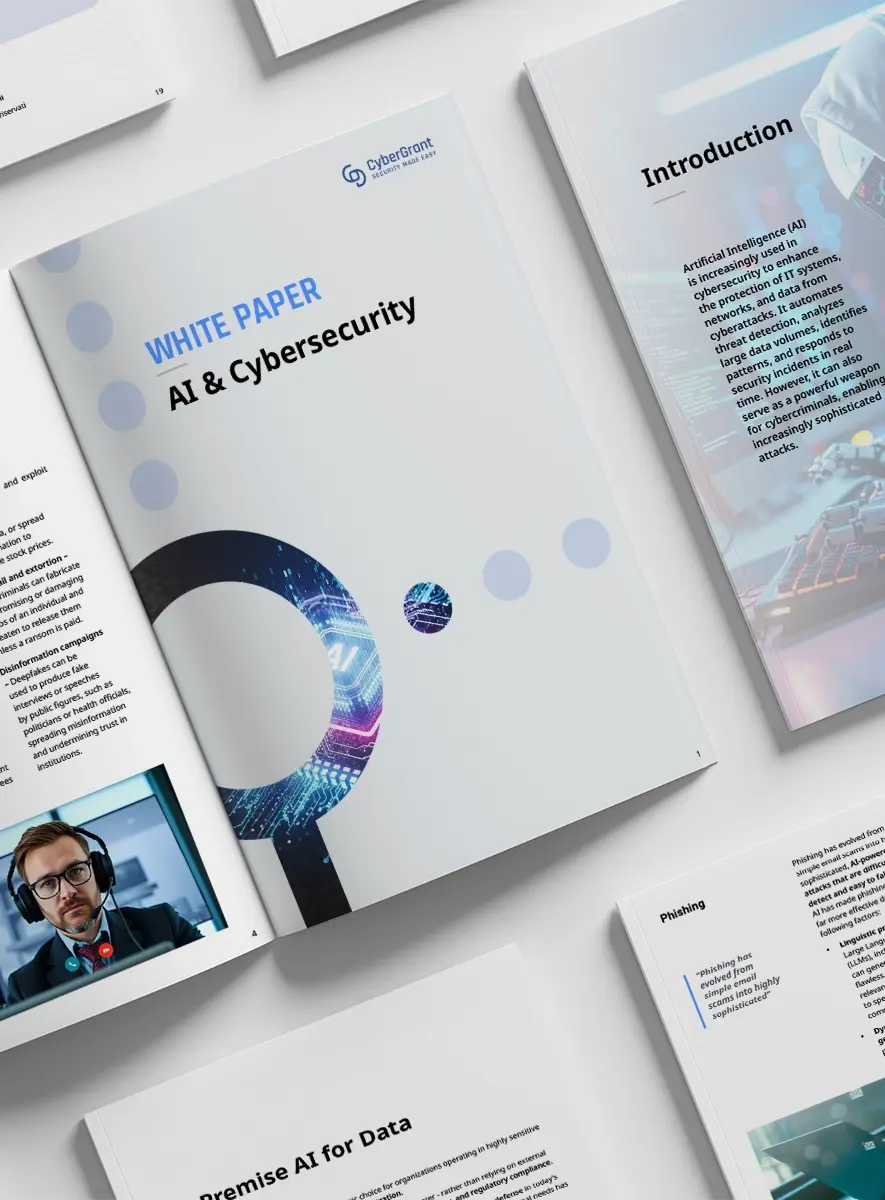
Close the Shadow AI gap without banning the tools your teams rely on, and decide which AI architecture keeps data under your control.
For teams responsible for data governance, accountability and alignment with GDPR, NIS2 and DORA.
For decision-makers who must assess impact, risk exposure and investment priorities for data security.
Deepfakes, advanced phishing, adaptive malware and RaaS. Why traditional defense models are no longer enough
How cybersecurity players are responding. Trends, innovations and dynamics shaping investments and security technologies
Public AI tools can leak sensitive data and intellectual property: the most underestimated risk for security teams. It happened at Samsung, where confidential data ended up in ChatGPT.
Data sovereignty and full control. Pros and cons of on-premise, open source and proprietary solutions
Automated detection, incident response, behavioral analytics and anomaly detection. Where AI brings tangible defensive value.
Security by Design, data governance, access control and continuous monitoring. How to adopt AI securely and stay aligned with GDPR, NIS2 and DORA