


Skip to content

CyberGrant protects every aspect of your digital security

Discover the modular solutions designed to protect your company from external and internal threats, as well as new challenges like AI.

key-minimalistic-square-3-svgrepo-com

Digital asset protection

Automatic classification

Cloud encryption

Email protection

Anti-phishing

password-minimalistic-input-svgrepo-com

Remote access

Access rules

Credentials

Stolen Device

Web access

email grant

Post-send control

Protected Attachments

Human error

Advanced encryption

laptop-svgrepo-com (1)

Beyond Antivirus

External Threats

Data Exfiltration

Remote Work

Zero trust

pulse-svgrepo-com

Device control

Shared files

Audit Trail

Credential Access

Email Channel

Anomaly detection

password

Company vault

Controlled sharing

Zero-trust encryption

Logging and generation

share

Third-party users

RBAC

Anti-AI scraping

VDR

medal-ribbons-star-svgrepo-com

GDPR and encryption

NIS2

DORA

AI act

Audit

bot-svgrepo-com

AI control

Automated classification

AI blocking

Private AI

magnifer-bug-svgrepo-com

Attack Surface Mapping

Penetration testing

Ransomware

Human Factor

After the Test

Tailored cybersecurity for every business.
Scalable solutions compatible with legacy systems, designed for both SMEs and large enterprises requiring full control over data, access, and sharing.


IT
Consulting
Travel
Advertising

Construction
Real Estate

Oil & Gas
Electricity
Telco

E-commerce
Transportation
Shipping
Retail chains

Design
Automotive
Industrial

Central agencies
Local agencies
Supranational orgs

Discover security features to protect your data, files, and endpoints

FileGrant
FileGrant

Securely store, share, and manage your files with an advanced, easy-to-use, and highly customizable platform


SG_pittogramma_blu
SecretGrant

Control every credential like a file. Share, track, and revoke access instantly.


RemoteGrant
RemoteGrant

RemoteGrant protects your business from attacks and data loss by enabling employees to securely access workstations and files from anywhere.


EmailGrant
EmailGrant

Encrypt every email and keep control of attachments, even after sending.


AG_pittogramma_blu
AIGrant

AIGrant is your personal assistant - it understands your data, keeps it secure, and delivers exactly what you need.


Connector CyberGrant
Connector

Encrypts every file on SharePoint and OneDrive, in any format, leaving your libraries, permissions, and daily workflows untouched.


CGSite_hero_regulation

Compliant because protected: compliance that starts with the data

 GDPR, NIS2, DORA, and the AI Act ask for the same thing in different ways: that data stays private and traceable wherever it ends up. We start there, and compliance stops being just a cost: less exposure to fines and breaches, more trust from clients, partners, and regulators.

The regulations change, the underlying requirement stays the same

GDPR, NIS2, DORA, the AI Act, plus sector rules like IVASS and EIOPA in financial services and HIPAA for organizations handling US health data: the obligations have multiplied, each with its own language, deadlines, and penalties.

Underneath, though, they converge on a single technical point: making sure data stays confidential and verifiable even when it leaves the systems that created it. Encryption at the source and control over who has access are the common denominator of almost every requirement. That is where compliance is best built, before you get to the individual obligation.

AdobeStock_1405552456_web


GDPR AND ENCRYPTION

When data is unreadable, a breach weighs far less

Article 32 of the GDPR calls for appropriate technical measures and puts encryption near the top. There is a practical effect that often gets overlooked: if exfiltrated data stays encrypted and unintelligible, the obligation to notify data subjects of the breach (Article 34) may no longer apply. Encryption pays off twice: it satisfies the requirement and it reduces the impact when something goes wrong.

For organizations handling US health data, the HIPAA Security Rule points the same way.

FileGrant encrypts files at creation and keeps that protection even outside your systems; with EmailGrant, the same logic covers messages and attachments. The encryption we use already looks to the post-quantum standards being adopted at NIST, built for data that has to stay confidential for years.

 
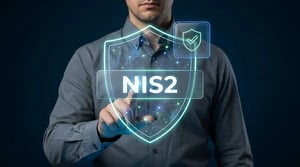
NIS2

NIS2 pushes accountability all the way to the top

Directive (EU) 2022/2555, transposed in Italy through Legislative Decree 138/2024, raises the bar for essential and important entities and assigns direct accountability to management bodies. Among the requirements: access control, activity logging, and prompt incident notification.

Here you need two safeguards working together, on files and on endpoints. FileGrant governs who opens each document and allows immediate revocation when something looks off; RemoteGrant monitors devices and records activity, so an incident becomes detectable and reportable within the timelines the directive sets.

Blog_NIS2-PMI


AdobeStock_2013779168-compliance-1


DORA

DORA: resilience applies to the data you hand to third parties too

Regulation (EU) 2022/2554 requires the financial sector to achieve digital operational resilience and to keep tight control over ICT third-party risk.

The moment a file goes out to a supplier, a consultant, or a counterparty, responsibility for the data still rests with you..

FileGrant extends control beyond the company boundary: role-based access, expiration dates, revocation after sharing, and a trace of every open.

RemoteGrant applies encryption and policies on endpoints and blocks unauthorized transfers in remote sessions, a sensitive point for banks and insurers also subject to IVASS and EIOPA

 
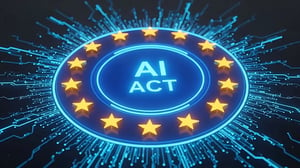
AI ACT E SHADOW AI

AI compliance starts before the data reaches the model

The AI Act adds new obligations while the GDPR's remain fully in force. The most concrete risk, meanwhile, has a name: Shadow AI, employees pasting confidential documents into public chatbots.

Data leaves your control the instant it is sent to an external LLM.

AIGrant brings artificial intelligence inside the perimeter: it queries your documents in natural language without exposing them to public models, and it inherits permissions and classification from the files themselves.

The productivity of AI stays available, and so does the confidentiality of the data.

AI ACT


audit


AUDIT AND CHAIN OF CUSTODY

Audits ask for evidence, and evidence lives in the logs

GDPR, NIS2, and DORA converge on a very practical demand: proving who did what, when, and with what authorization. The HIPAA Security Rule adds the same expectation for US health data, with audit controls that require recording and examining activity in systems that hold electronic PHI.

The hardest threat to catch here is the legitimate insider, someone who holds valid access and uses it beyond what the role requires.

Every action on files protected with FileGrant leaves an unalterable trace (creation, opening, editing, sharing, revocation), ready to present during an audit. SecretGrant applies the same principle to credentials and API keys, among the first targets for anyone trying to move laterally across the network.

CG_site_BKG_parallax_services

Compliance doesn’t have to be complicated

CyberGrant solutions integrate data protection, access management, AI governance, and process auditing within a secure, centralized ecosystem. 

We simplify compliance and reduce risks while ensuring full control, traceability, and transparency across every device and user.

GDPR_wNIS2_wDORA_wHIPAA_w

Domande frequenti

Which regulations require encrypting company data?

No regulation mandates a specific algorithm, but several require encryption appropriate to the risk. Article 32 of the GDPR explicitly names encryption among appropriate technical measures; NIS2 and DORA require protection, access control, and traceability. In practice, organizations use AES-256 for data at rest and TLS 1.3 in transit, with a transition toward post-quantum standards for data that must stay confidential for years.


Does encryption remove the obligation to notify a data breach?

Not always, but it makes a real difference. Article 34 of the GDPR provides that notifying data subjects of a breach may not be required if the data involved was protected by measures, such as encryption, that make it unintelligible to anyone unauthorized. Other obligations still apply, including notification to the supervisory authority under Article 33.


What does NIS2 require of companies?

Directive (EU) 2022/2555 was transposed in Italy through Legislative Decree 138/2024. It requires essential and important entities to adopt risk management measures, access control, activity logging, and prompt incident notification, with direct accountability for management bodies. In Italy, the most current implementing reference is the National Cybersecurity Agency (ACN) Determination 127437 of 13 April 2026.

How does DORA apply to ICT third-party risk? Regulation (EU) 2022/2554, applicable since 17 January 2025, requires the financial sector to achieve digital operational resilience and to keep tight control over ICT providers. Responsibility for the data stays with the financial entity even when a file is entrusted to a supplier or counterparty: it calls for role-based access, revocation after sharing, and a trace of every open.
What is Shadow AI, and why is it a compliance problem?

Shadow AI is the ungoverned use of public AI tools by employees, for example pasting confidential documents into an external chatbot. Data leaves company control the instant it is sent to an external LLM, creating risk under the GDPR and the AI Act. A private, on-premise AI keeps documents inside the perimeter.

How do you demonstrate compliance during an audit?

GDPR, NIS2, and DORA converge on a practical demand: proving who did what, when, and with what authorization. It requires unalterable logs of actions on data (creation, opening, editing, sharing, revocation), extendable to credentials and API keys as well. The hardest threat to catch is the legitimate insider, who uses valid access beyond what the role requires.


How does CyberGrant support HIPAA compliance for US health data? HIPAA's Security Rule sets technical safeguards for electronic protected health information (ePHI): access control, audit controls, integrity, and transmission security. File-centric protection maps directly to these. FileGrant encrypts ePHI, controls who can open it, keeps an unalterable audit trail of every action, and lets you revoke access after sharing. Encryption is currently an addressable specification under HIPAA; a proposed 2025 update, still pending as of mid-2026, would make it mandatory, with AES-256 at rest and TLS 1.2 or higher in transit. CyberGrant provides the technical controls; full HIPAA compliance also depends on your administrative safeguards and policies.

Book your free consultation

Discover how our solutions help you turn regulatory pressure into strategic protection - and peace of mind.