


 FileGrant
 RemoteGrant
 Connector
 AIGrant
 EmailGrant
 SecretGrant

Monitor and control your data, wherever it goes
Real-time visibility and control over access, files, credentials, and email, inside and outside your organization.
Manage, monitor, protect
Monitoring rarely fails for lack of data. In 75% of breaches, the signals needed to catch the attack were already sitting in company logs, scattered across separate systems and never correlated (ENISA, View on Cybersecurity in the Frontier AI Era, 2026). The hard part is seeing them in time, on the data that matters, before it leaves the company.
CyberGrant moves monitoring from the perimeter to the file. Every access, every action on a document, every credential used leaves a readable trace tied to the data itself, not to an isolated log in a separate system. Control does not stop when a file leaves the company: you know who opens it, from where, and you can act while it happens.

Continuous control over activity on physical and virtual machines, including RDP
In 2017 a Waymo engineer with fully legitimate access downloaded 14,000 confidential files before leaving for a competitor. No perimeter was breached and no alert fired on the mass download: the activity came from inside, from an authorized user.
That is the blind spot of perimeter monitoring, which cannot tell a normal access from an abuse in progress.
RemoteGrant applies more than 20 policies directly on the endpoint, raises alerts on mass downloads and anomalous behavior, blocks unauthorized USB devices, and makes the RDP port invisible to scanners (patented technology), with single-user access and encrypted RDP transfers.
It catches the anomaly and lets you react in real time, before it turns into exfiltration.
Control over what happens to a file even after it leaves the company
Once a document crosses company boundaries, traditional control ends. Download, editing, re-sharing with third parties: after the file is handed over, you no longer know who does what with it, and you have no way to undo it.
FileGrant keeps protection inside the file. You can authorize, restrict, or revoke download, editing, and re-sharing in real time, even after sending, and see every action as it happens. The document stays accessible only to those who genuinely need it, wherever it travels.


A complete chain of custody on every file and folder, in real time
The median time between a first unauthorized access and data exfiltration is 72 minutes (ENISA, View on Cybersecurity in the Frontier AI Era, 2026). A log you read the day after the incident helps little. NIS2, DORA, and Article 32 of the GDPR require knowing who did what while it happens, with traceability that holds up as evidence.
FileGrant records every activity on files and folders in real time and ties it to the user, with On Behalf mode that lets an administrator access files for audit and incident response while leaving a trace of that access too. The chain of custody stands as evidence in an audit, with no after-the-fact reconstruction needed.
Who accesses which credentials, when, and from where, always tracked
Credentials are the first thing an attacker looks for after getting in: InfoStealer activity grew 84% in 2024 (Clusit Report 03-2026). Passwords shared in the clear over chat, files, or spreadsheets leave no record of who used them, so when you need to trace where the abuse started, the log does not exist.
SecretGrant, the credential management module of FileGrant, treats every password like a file: encrypted, with permissions, expiration, and access logs. You see who opened a credential, when, and from where, and you can revoke it at any time without having to change it.

Tracking and revocation of messages even after they are sent
Email is still the easiest channel for data to leave through, and the hardest to monitor. Once you hit send, you do not know whether the message was opened, by whom, or whether it reached the wrong address. 94% of companies suffered an email-related incident in the past year (Email Security Risk Report 2024).
EmailGrant, the secure messaging module of FileGrant, tells you who opened a message, when, and from which IP, and lets you revoke it or make it expire even after sending. Attachments inherit the permissions and restrictions of the file, so tracking does not stop at the message body.
Private AI reads the activity and flags suspicious behavior
More sources to monitor means more noise. Generic alerts and false positives are why teams stop watching their dashboards, and that is how a real anomaly slips through among a thousand signals.
AIGrant brings private AI into monitoring: it automatically classifies confidential documents, applies no-download policies on sensitive files, and flags out-of-pattern activity, with every interaction logged and no data leaving the company.


Whitepaper
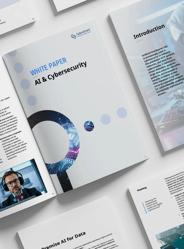
Catch the anomalies traditional monitoring lets through
The CyberGrant guide to AI in cybersecurity: what to monitor in real time, how to recognize anomalous behavior, and how to stop it before it becomes an incident.
FAQ
File-centric monitoring tracks activity at the level of the individual file, not the network perimeter. Every access, open, edit, or share stays tied to the document and the user, inside and outside the company. Traditional DLP watches the network boundary and loses sight of the data as soon as it leaves, while CyberGrant's file-centric model keeps seeing and controlling the file wherever it goes.
Book your free demo
Talk to our security experts and discover how real-time monitoring helps detect threats, block misuse, and maintain full visibility over endpoints, files, and user behavior. Keep your systems secure, responsive, and compliant.