


.svg)






 FileGrant
 RemoteGrant
 Connector
 AIGrant
 EmailGrant
 SecretGrant
Endpoint protection that defends the data, not just the device
Antivirus and EDR watch the device. CyberGrant protects the file that lives inside it: encrypted and governed on the endpoint, even offline or when the PC is compromised.
Endpoint protection and data security
Hybrid work moved data outside the network. It lives on laptops that connect from home, a hotel, an unmanaged network, and every endpoint becomes an exit point: a USB drive, a screenshot, a remote session, a downloaded file.
According to the Verizon 2026 DBIR, ransomware is present in 48% of breaches, and in most cases the initial access comes through a device. A breach now costs $4.44 million on average (IBM, 2025). Protecting the endpoint means protecting the data that passes through it, not just the device that hosts it.

File-Centric Protection: Transparent Encryption on the Endpoint
Antivirus and EDR look for the threat on the device: suspicious processes, malware, anomalous behavior. It's a necessary defense with a clear limit, because it assumes the attack can be recognized. Against silent spyware, a zero-day, or an authorized user copying a file, there's nothing to detect. The Verizon 2026 DBIR confirms it: in 73% of ransomware attacks the victim had already suffered credential theft, often invisible to detection tools.
RemoteGrant adds the layer that's missing: transparent encryption of the file on the endpoint. The document is encrypted automatically, with no steps for the user, and stays protected regardless of the device's state. If the PC is compromised, the attacker finds files they cannot read.
Defending Against Ransomware, Zero-Day, and Backdoors
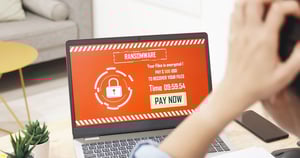
The costliest external threats are the ones detection tools don't stop in time. A zero-day exploits a still-unknown vulnerability, a backdoor or spyware stays silent for months, and modern ransomware doesn't just encrypt files: it steals them for double and triple extortion. In Italy, the 2026 Clusit Report counts 166 ransomware attacks in 2025, up 14% year over year.
RemoteGrant acts on the data, not on the threat signature. Transparent encryption makes files stolen in a double-extortion attack worthless: they stay unreadable outside authorized devices, so they can't be published or resold. And because file access is granted only to authorized applications, a zero-day payload or a backdoor already on the PC can't read protected data.

Stop Data Exfiltration: USB, Clipboard, Screenshots
Most data doesn't leave through a sophisticated attack, but through everyday actions: a file on a USB stick, the screenshot of a contract, a copy-paste into a personal channel, a folder synced to a non-corporate cloud. These are actions by people who already have legitimate access, the case traditional DLP struggles to see. In the Waymo-Uber Cold Case, an engineer with regular access walked out with 14,000 confidential files on an external drive: no malware, just data born unprotected.
RemoteGrant's policies enforce control at the source, on the device, with over 20 configurable rules: USB whitelisting by serial number, clipboard control, screen-capture blocking, folder-access restrictions. The rules follow the file and stay active even when the device is offline, where cloud-dependent solutions lose their grip.
Remote Endpoints and RDP: The Surface the Perimeter No Longer Covers
Remote access is one of attackers' favorite entry points. In 2021 Colonial Pipeline was shut down through a single reused VPN credential with no multi-factor authentication. The problem hasn't aged: in 2024 TeamViewer was abused to deliver LockBit 3.0 ransomware.
RemoteGrant secures remote access without sacrificing business continuity: protected file transfer within the RDP session, clipboard control between host and client, and an RDP port made invisible to network scanners (patented CyberGrant technology). Anyone scanning the network for exposed services finds no point of attack.


Your Perimeter Is No Longer the Network. It's Every Device That Touches Your Data
Zero Trust starts from a simple principle: no access is trusted by default. On the endpoint, that means no longer treating software as safe just because it's already installed.
RemoteGrant grants access to encrypted files only to authorized applications and blocks unsafe or compromised ones, even when they're already on the PC.
Underneath, Lock&Go encryption (AES-256 with CRYSTALS-Kyber key exchange, NIST post-quantum standard) protects the file even against the "harvest now, decrypt later" scenario, where attackers store encrypted data today to decrypt it tomorrow with quantum computers.
Security becomes a property of the data: wherever the file goes, its protection goes with it.

Whitepaper
Your Perimeter Is No Longer the Network. It's Every Device That Touches Your Data.
Ransomware, insider threats, and remote work have shifted the risk to the endpoint. Download the Ransomware, Spyware & Backdoor whitepaper and see how to protect files on devices, even when antivirus isn't enough and the network isn't there.
Domande frequenti
File-centric endpoint protection moves security from the device to the individual file. The document is encrypted directly on the endpoint and stays protected wherever it goes, even if the PC is offline or compromised. Unlike antivirus, which defends the device, this approach makes the data unreadable to whoever steals it.
Transparent encryption is the automatic encryption RemoteGrant applies to files on the endpoint, with no action required from the user. The file stays readable only to authorized applications and devices, even offline or if copied elsewhere. To the person working it is invisible; to an attacker it is an unreadable file.
RemoteGrant acts on the data, not on the threat signature. Transparent encryption makes files exfiltrated in a double-extortion attack unreadable, so they cannot be published or resold, while Zero Trust application control stops unauthorized or compromised software from accessing protected files. It works alongside antivirus and EDR when detection is not enough.
With policies applied directly on the endpoint. RemoteGrant offers over 20 configurable rules: USB whitelisting by serial number, clipboard control, screen-capture blocking, and folder-access restrictions. The rules stay active even when the device is disconnected from the network.
By securing the session, not just the connection. RemoteGrant encrypts file transfer within RDP, controls the clipboard between host and client, and makes the RDP port invisible to network scanners with patented CyberGrant technology. Remote support stays operational without exposing a point of attack.
It means not treating software as trusted just because it is already installed on the device. RemoteGrant grants access to encrypted files only to authorized applications and blocks unsafe or compromised ones. Lock&Go encryption with the CRYSTALS-Kyber algorithm (NIST post-quantum standard) protects the file even against the "harvest now, decrypt later" scenario.
es. Data encryption, access control, audit trails, and detailed logs are measures that support NIS2, DORA, and GDPR obligations. RemoteGrant records activity on endpoints and provides the evidence needed for audits and incident response.
Start with a free consultation
See how we can help you protect your people, devices, and data - without slowing business down